contact us

Use the form on the right to contact us.

955 Benecia Ave.
Sunnyvale, CA 94085
USA

(408) 479-4742

ILUMIN Blog

Helpful tips about college admissions, test preparation and just being a better student, leader and person from ILUMIN Education.

ILUMIN INTERVIEW ON BAY VOICE RADIO - COURSE PLANS!

Elton Lin

This past week, Azure provided her insights into effective course planning on Bay Voice Radio, 96.1 FM (Bay Area, NorCal). 

Knowing how to structure your classes is an important step, not only to prepare for college applications but to prepare to be successful in college. Check out what Azure would like every student to know before choosing next year's classes. 

Although the interview questions are in Chinese,  Azure's answers are in English with Chinese translations. If you would like to find out more, we'd be happy to do a free consultation and discuss how we can help. Click HERE to contact us and click on the link below to listen to the interview!

Bay Voice Interview -- Suggestions For Planning Your Courses

ENTREPRENEURSHIP WORKSHOP FOR TEENS // LED BY STANFORD D-SCHOOL ALUM

Elton Lin

Want to help your son or daughter develop an entrepreneurial mindset?
Want to see your son or daughter get an idea off the ground?
Want to help your son or daughter develop tools to life-long success?

The Design Farm, an educational non-profit started by Stanford d.school (Institute of Design) alumni, is putting on a four-day entrepreneurship workshop for teens based on the design principles taught in Stanford's d.school.

The goal is to help students develop solutions to real problems through the lens of empathy. The training will equip students with the same concepts used by Apple, Google, and GE Health to innovate out ground-breaking products.

March 12, 13, 19, 20th - 1-6pm
Palo Alto High School Library
50 Embarcadero Road
Palo Alto, CA

AND... ILUMIN friends get a discount!

$75 off the registration if you use the coupon code "ILUMIN"!

First session starts March 12th - go HERE for more info and to register! Click HERE for more info on The Design Farm. 

Feel free to contact us for more info: info@ilumineducation.com.

design thinking stanford entrepreneurship

Seminar - REAL Applications Through the Eyes of an Admissions Reviewer

Elton Lin

MARCH 19TH - 1PM - SEATING LIMITED - CLICK HERE TO REGISTER

UCs are getting more competitive every year. In 2016, over 200,000 students applied to the UC campuses.  What can students do to standout?

Come to ILUMIN Education’s Admitted or Denied: College Applications from a UC Reviewer event to hear Azure Brown, a former UC admissions counselor, give insight into common questions such as:

  1. How does the admissions office review applications?

  2. What are admissions reviewers looking for in a student?

  3. What are the most important elements for admissions reviewers (grades, tests scores or activities)?

Don’t miss this opportunity to learn directly from an admissions reviewer and see what the UCs and other TOP universities really want in a student!

FREE drawing for the following items (starting at 1pm sharp!)

  • Apple Watch

  • SAT Class with AJ Tutoring

  • 1 year of FREE Consulting Sessions with Azure Brown herself*

Seating is LIMITED, reserve your spot now! To REGISTER, click HERE.

Saturday, March 19th: 1 - 3 pm
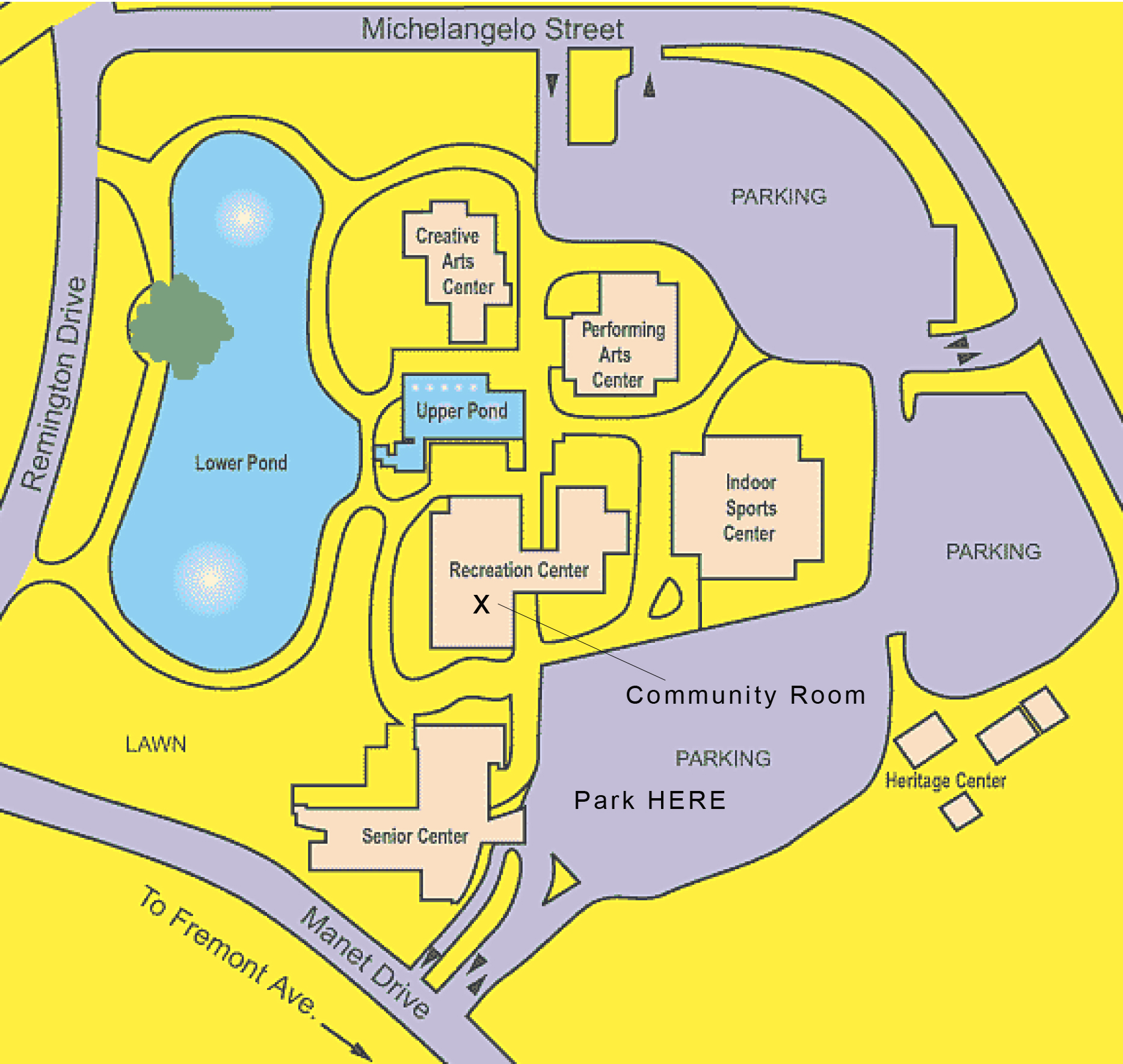
Sunnyvale Community Center (The Community Room - See map below)
550 E Remington Dr.
Sunnyvale, CA 94087

For more information, contact us at info@ILUMINeducation.com or call (408) 479-4742 and leave your name, phone AND email. Or click HERE to register. 

Hosted by:

ILUMIN Education
College Admissions Counseling and Life Coaching
www.ILUMINeducation.com
(408) 479-4742
info@ILUMINeducation.com

* - One free year of coaching services included after signing a complete contract that includes services for the remainder of the high school years. Current sophomore students (as of March 2016) or younger ONLY. 

High School Course Planning: 5 Things You Must Know

Elton Lin

I often get questions about what classes admissions readers want to see on college applications. And the truth is that a good course plan is important. It will not only make you stronger for college applications, it will make you stronger in college.

Before you sign up for another year of classes, here are 5 recommendations to help you make the right decisions.

1. Know when to compare yourself to others.

When parents tell me about a student they’ve heard about with a 3.8 GPA and just above average SAT score who was admitted to Stanford, my initial question is: from what high school?

You should know that as a college applicant, you’re compared to your peers. When evaluating freshman applications, one of the first things I looked at was high school information. Your GPA will be viewed differently depending on the average GPA at your high school as well as how many honors and AP courses you take in the context of how many are offered, not to mention other factors that can make your academic performance look remarkably different.

Despite being compared to others, you should still be realistic about your ability to manage your course load. If you’re stuck on taking 5 AP courses your junior year because you hear this is how your cousin got into Cornell, but then earn multiple C’s, it will not only make Cornell impossible, it will eliminate so many other college options that may otherwise be a good fit.

2.  Challenge yourself.

On the other hand, earning a perfect GPA with low course rigor is not the path to your best college results. It’s truly better to risk B’s with a challenging course load than it is to maintain straight A’s with a relatively easy course load. When I was trained to read UC freshman applications, I was told to pay attention to rigor. If a student was taking a challenging course load, even the occasional C can be forgiven.

As a consultant, I worked with Charles who earned a 3.5 unweighted/3.9 weighted GPA but had taken all of the AP math and science courses offered at his competitive high school. He wasn’t sure what his college results would be, especially considering his 2000 SAT score, but he was admitted to the School of Computer Science at Carnegie Mellon. Clearly, his high course rigor balanced his relatively low GPA.

3.  Find your direction.

The reality is your prospective major means so much in terms of what classes you should take to be a strong college applicant. If you’re aiming for a top-ranked business school, it would benefit you to include AP US History and AP Gov in your course plan. If you’re applying as an Engineering major, you should plan for AP Physics in your junior year.

A successful course plan can look so different depending on the prospective major. Kevin, a theater major, took AP Psychology, Drama, and AP English. Despite a below average GPA for his high school, his strong performance in these classes contributed to his admittance to the University of Illinois at Urbana-Champaign.

4. Try something new for your language other than English.

When you’ve grown up learning a language other than English (LOTE), it often means that your academic achievements in that language, even perfect scores on the SAT and AP exams, will not set you apart for college admissions.

I firmly believe that every decision regarding high school planning should not be based on whether it will make a student look good for college admissions. If you are a first-generation American, learning the language of your parents can be a richly rewarding experience that extends beyond college results.

And, there are exceptions to practically any recommendation for college admissions. For example, my student Stella immigrated to the U.S. from Taiwan in 9th grade. She struggled to improve her English, and therefore, I recommended she meet her LOTE requirement with Chinese so she could focus on English. Stella made great strides in her English abilities and even took an advanced English course as well as AP Econ and AP Biology in her senior year. Her hard work paid off when she was admitted to NYU and USC.

However, if you aren’t in Stella’s position and want to be as competitive as possible for college applications, enroll in a LOTE that is not the language of your parents during your high school years and “finish” the language by completing courses through the AP level. Taking your time to study - and excel - at a language other than any you were taught as a child is a sure way to strengthen your profile for college applications.

 5. Achieve your balance.

There are going to be certain classes that are easier for you than others. Use this self-understanding to balance your course plan. In other words, if pursuing art isn’t a serious endeavor for you, perhaps you want to plan for a painting class that meets your UC art requirement during junior year as a welcome relief to all those AP math and science classes.

Or maybe, as a business major, you know you want to take AP US History your junior year, so you take AP Environmental Science that year instead of AP Biology, a course that competes with AP US History for requiring the most  memorization.

Another way to look at it is if you have a natural talent for a certain subject area, plan your courses to showcase that talents. I worked with Sandy who wanted to study business and had a passion for learning languages. Through high school and community college classes, she took classes in three languages. These classes didn’t seem like work to her, and her achievement in multiple languages made her stand out for college applications.

The most important perspective you can have when planning your high school courses is knowing what makes sense for you. If you challenge yourself, keeping in mind your strengths and abilities in the context of your goals, you will maximize your college options.

If you have any questions about course planning I'm happy to help. Click here to schedule a free consultation or give us a call at (408) 479-4742.

--Azure Brown


5 QUESTIONS FOR AZURE BROWN, FROM THE PERSPECTIVE OF A UC EVALUATOR

Elton Lin

Azure Brown joined Ilumin Education’s consulting team in September 2015. For more than 10 years, she worked in secondary education as a high school teacher and administrator that included English department lead and vice principal. Since 2009, she has been counseling students in college admissions. Before joining Ilumin, she was a senior evaluator and counselor for the University of California, reading applications and counseling high school and transfer students on the UC application process.

As an Ilumin consultant, Azure coaches students from 8th grade through college, supporting the application process for every stage, including private high school, undergrad, and grad school. We are excited about the experience and passion she brings to our team.

We asked Azure five questions to help you get to know her better.

1. What is one of your favorite aspects of working with students?

I love supporting application essays. For the students applying to summer programs, my advice is centered around encouragement and application essay mechanics. A typical case would be Stacy, a 10th grader who didn’t think she was “good enough” for COSMOS, a summer academic science program, which is quite competitive. With a little guidance, she wrote thoughtful and enthusiastic essays. I was thrilled, not just because she was admitted to the program, but because she felt empowered through the writing process.

This process is even more complicated - and rewarding - for college application essays. The writing is often casual and creative, like an entertaining conversation with a trusted friend. Supporting students through this sometimes scary writing process can be so challenging - but when students tell me I’ve helped them express themselves more authentically than they could on their own, I know that a kind of personal success has been achieved that extends beyond college results.

And, from my experience, those that are most authentic in their essays achieve their best results, like Phil who wrote about standing up to bullying - even exposing those moments when he didn’t behave at his best - and was admitted to both UCLA and UC Berkeley with somewhat average test scores.

2. What is one insight you’ve gained from being an admissions reviewer?

I believe the most important quality for your best college results is resiliency. I’ve sat with parents who have cried over a “C” in junior year and students who felt like their college dreams were over when they received a weak SAT score. However, it’s important to gain a wider perspective on your future.

As an admissions reviewer, I was humbled by gaining a glimpse into the lives of a cross-section of UC applicants. It’s important to understand that no matter your challenges, there are likely to be so many other applicants confronting even greater challenges. And the truth is that a UC reader is evaluating your application holistically, which means they are not as concerned with your weaknesses as they are with the sum of your strengths.

No matter your setback, it’s all about how you respond. Stella, a brilliant junior I worked with, was turned down to every competitive research program she applied to for that critical summer before senior year. So she got to work - until she had secured a job shadow that led to research completed partly at home because there was limited space available in her mentor’s lab. She was admitted to Cornell, UPenn, and UC Berkeley.

3. What do you want students to know?

I want students of every grade level to know the surest path to future success is to try something new. If you think you know your direction in life, look for ways to get more firsthand experience in your prospective major. If you have no leadership experience, think about what you do well and how your strengths could benefit others. If you’re not sure about your direction or strengths, sign up for a volunteering experience, join a school club, or apply to a program that interests you to start figuring it out.

No matter where you are in the process of finding your direction in life, going out of your comfort zone will surely pay off in greater self-knowledge and confidence.

4. What do you want parents to know?

Parents often ask me how they can help their sons and daughters achieve their greatest success.

What I tell them, after working in education for more than 20 years, is the best thing that parents can do for their teens is to give them a certain level of independence in making decisions, even if it sometimes means watching them fail.

Being a protective parent myself of two daughters, I understand this message can be counterintuitive. However, I’ve seen too many students who run into trouble after becoming an adult because they don’t know how to think for themselves. It’s so much better for your child to experience the outcomes of their decisions, in the context of your supportive home and patient guidance, than it is to send your child off for freshman year of college without the ability to think and act independently.

5. What is one way you can help?

Every student - and family - is different in terms of what type of guidance they would most benefit from. As a coach, my role is to help each student take that next step, whether it’s improving study skills, increasing organization, exploring interests, setting goals, creating solutions to problems, assessing progress, or presenting yourself effectively on applications.

I truly enjoy helping students make incremental changes that result in greater confidence and achievement.

Click here to schedule a free consultation with Azure and discover how she can help your child! 

ILUMIN Interview on Bay Voice Radio - Summer Plans!

Elton Lin

It's important to properly plan your child's summer...

It's important to properly plan your child's summer...

This past week, John continued his popular series of radio interviews on Bay Voice Radio, 96.1 FM (Bay Area, NorCal). Throughout this series, he'll be highlighting aspects that help students find the right majors, write the best (and most honest) essays and reach the right universities.

This time... summer plans! What to do this summer that will really make a difference. 

The interview is primarily in Chinese -- apologies to the non-Chinese speakers! If you would like to find out more, we'd be happy to do a free consultation and discuss how we can help. Click HERE to contact us and click on the link below to listen to the interview!

BAY VOICE INTERVIEW - SUGGESTIONS FOR PLANNING YOUR SUMMER

Summer Programs Alternatives: 5 Outstanding Summer Options

Elton Lin

When faced with the question of what to do this summer, a program could be the most convenient answer. There is a worthwhile program for you, no matter your interests, GPA, or goals. Still, summer programs are not mandatory for your best college results. Every year, thousands of students who have never participated in a single summer program are admitted to even the most competitive colleges.

As a former UC admissions evaluator, I have been asked many times which summer activities increase a student’s admissions chances. The perhaps unsatisfactory answer is: it depends. There are numerous factors that can make a summer experience an asset to your college goals.

For one, admissions readers review extracurricular activities for evidence of your genuine interest in your prospective major. If you love it, why wouldn’t you be spending your free time doing it? And, if you’re not sure about your major, summer is the perfect time to try something new. Even if you don’t like what you try, the time you spend exploring demonstrates your intellectual curiosity, motivation to succeed, and discipline to see something through to completion.

What admissions readers aren’t looking for is how expensive the summer program or how prestigious the host university, even if you’re applying to that host university. So, if you have summer commitments that preclude you from participating in a program, it’s not in your family budget, or you are denied by your desired programs, here are five outstanding options for your consideration.

1. Volunteer locally

So many well-meaning families arrange for their sons and daughters to volunteer overseas. However, many colleges view these summer escapades as “voluntourism.” If you can pay, you can feel good about yourself. Instead, volunteer locally. What colleges want to see is: How does your commitment to social justice play out in your own backyard? How are you applying yourself selflessly in the long term, not just during an expensive trip?

Lisa volunteered in a food pantry during the school year. When she needed to stay in town for her SAT prep course, she increased her summer hours at the food pantry. She made it her mission that summer to find a better way to organize the food donations. The experience Lisa gained from leading the food pantry project became a strength that helped her achieve her college goals.

2. Take a class

Community college courses offer a wealth of opportunities to explore your interests at bargain rates. For Kristen, earning an A in a community college accounting course became a convincing argument to colleges that she was a strong candidate for their accounting programs.

For students in 10th and 11th grades, a passing grade in a UC-transferable California community college (CCC) course is guaranteed to be treated as a weighted GPA point for UC--just like an AP course. And now, with a searchable database of online CCC courses, it is easier than ever for high school students to pursue their interests while improving their UC GPAs through CCC courses.

3. Get a job

Working requires that you show up on time, be a team player, and meet the expectations of your customers and/or boss. Even those students earning a perfect GPA have something to learn from giving good customer service at the local burger joint for minimum wage, and college officials understand this.

My student, Jared, who was interested in business and fashion got a retail job at Macy’s, which led him to a new understanding of selling techniques. Jared’s job experience became the theme of his main personal statement, and he was admitted to top business schools.

Demonstrating your ability to maintain--and excel--at a humble job in the real world is worth more than your paycheck. And, if you’re able to contribute something new to the workplace you join, your accomplishments become brag worthy, a jewel in the activity section of your college applications.

So, start working on that resume. Even if you don’t have work experience, you can still write a resume.

4. Land an internship

What student wouldn’t want a summer internship? The challenge is the much celebrated internship in your field of choice may not be readily available. Therefore, aspiring interns need to be resourceful.

James’ summer research plans fell through at the last minute. So, I had him look up local researchers who were doing the specific kind of research he was interested in. James contacted several researchers to request a brief informational interview. One of his contacts replied to him, and the interview went well, leading to a job shadow, and eventually, an internship.

5. Start something new

Completing an independent project that you’re in charge of is one of the most impressive activities that you can report on a college application.

The options are endless. Mary taught a writing course at Boys and Girls Club and was admitted to almost every school she applied to. Other students I’ve worked with have done everything from creating a shopping service, writing an e-book, and spreading awareness about hepatitis B. You can’t go wrong with working toward a solution for a local problem.

No matter what you decide to pursue for summer, remember to have fun. Exploring your interests and demonstrating your passion should translate into enjoying your summer break. If you find your summer plans to be less than inspiring, it might be time to consider a new direction.

If you’d like to know how we can help with your--or your teen’s--summer, please contact us to schedule a free consultation at info@ILUMINeducation.com or (408) 479-4742.

Introducing ILUMIN Education's NEW Educational Consultant: AZURE BROWN!

Elton Lin

Azure BrownEducational Consultant

Azure Brown
Educational Consultant

We can't tell you how OVERJOYED we are about the new addition to our staff!

Azure Brown comes with a wealth of experience:

  1. Senior Admissions Evaluator and Counselor - University of California
  2. Reviewed 1000+ applications within the UC system
  3. 10+ Years - High School English Teacher and Administrator
  4. 6+ Years - College Admissions Counselor
  5. Worked with students admitted to: Harvard, Stanford, UC Berkeley

AND is the mother of TWO beautiful daughters! Read the rest of her bio HERE.

It's rare to come across someone with Azure's credentials. She is an amazing advisor and mentor and we're excited to have her on the team! 

Azure is providing free 1-hr consultations to discuss how she can help with the college preparation and admissions process. Contact us at info@ILUMINeducation.com or (408) 479-4742.

ILUMIN INTERVIEW ON BAY VOICE READIO - CURRENT TRENDS IN COLLEGE ADMISSIONS

Elton Lin

Last week, John continued his series of radio interviews on Bay Voice Radio, 96.1 FM (Bay Area, NorCal). Throughout this series, we'll be highlighting aspects that help students find the right majors, write the best (and most honest) essays and reach the right universities.

The interview is primarily in Chinese -- apologies to the non-Chinese speakers! If you would like to find out more, we'd be happy to do a free consultation and discuss how we can help. Click HERE to contact us and click on the link below to listen to the interview!

BAY VOICE INTERVIEW - PART 2 - CURRENT TRENDS IN THE COLLEGE ADMISSIONS LANDSCAPE

ILUMIN Interview on Bay Voice Radio - Helping Students Find the Right Careers

Elton Lin

Last week, John started the first of a series of radio interviews on Bay Voice Radio, 96.1 FM (Bay Area, NorCal). Throughout this series, we'll be highlighting aspects that help students find the right majors, write the best (and most honest) essays and reach the right universities.

The interview is primarily in Chinese -- apologies to the non-Chinese speakers! If you would like to find out more, we'd be happy to do a free consultation and discuss how we can help. Click HERE to contact us and click on the link below to listen to the interview!

BAY VOICE INTERVIEW - PART 1 - HELPING STUDENTS FIND THE RIGHT CAREERS