contact us

Use the form on the right to contact us.

955 Benecia Ave.
Sunnyvale, CA 94085
USA

(408) 479-4742

ILUMIN Blog

Helpful tips about college admissions, test preparation and just being a better student, leader and person from ILUMIN Education.

Five (5) Things to Consider for Finding the Right College

Elton Lin

A sometimes overlooked factor in deciding which admissions offer to accept is whether a college really is a good fit. No matter how well ranked a school, it isn’t a good school for you if you don’t embrace the campus environment. Determining the best fit means you can be assured on college move-in day that, despite any initial jitters, you are in the right place to pursue meaningful opportunities and be successful.

Here are five points for the consideration of college fit.

1. Competitive vs. Supportive Feel

Some students work better in a shark tank. They will push themselves to perform to their highest potential and maintain a laser-like focus on their goals within a highly competitive environment. Others will shut down, overwhelmed and inhibited from working to their potential. The feel of the community will vary across majors and social circles, but it’s worth becoming aware of details that influence campus culture. For example, UC Berkeley is known for cutthroat competition among students as a result of bell-curve grading policies in some departments.

2. New Locale

Many graduating high school students are bravely seeking new adventures. Students in the suburb want to move to the city; students in the city want to experience life in a quaint college town. However, for those of you who will be away from the family home for the first time, it’s worth becoming informed about what it’s like to function independently in the new location. A student from an LA suburb might struggle to navigate NYU’s decentralized urban campus in the snow. A student from Boston might be surprised a car is necessary to take full advantage of internship opportunities offered by UC San Diego. In some cases, it’s wise to make a less drastic location change for your undergraduate years.

3. Unexpected Benefit and Hidden Cost

Although public universities offer predictable tuition rates, private schools routinely include price breaks with their admissions offers. The most substantial price breaks go to the most desired applicants in the pool, such as those with high test scores, specific interests, or backgrounds serving to diversify the student community. It is therefore advisable that you apply to at least a couple private colleges, regardless of tuition rates, to see what your offers are. On the unexpected cost side of things, there are various aspects of student life at both publics and privates that may add to the cost of college, such as parking permits, plane tickets home, membership fees, common forms of student entertainment, and off-campus housing rates.

4. Greek Life and Athletics

You should know in advance how strong a presence both Greek organizations and athletics have on campus. At the University of Illinois at Urbana-Champaign, a large number of students are sorority or fraternity members. At the University of Michigan, competitive sports are an integral part of campus culture. Students who aren’t interested in these activities may feel as if their ability to network and make social connections is adversely affected. Students who are interested in these activities may be disappointed with a college life devoid of Greek traditions and big rah-rah football games.

5. Access and Size

A large university will offer a dazzling array of opportunities, but what’s important for you to know is the percentage of undergraduates who get involved and to what extent. The best research opportunities and field experiences tend to go to graduate students, so small colleges without substantial grad populations may offer you the best access to the kinds of opportunities that will prepare you for career and grad school. Furthermore, if you haven’t learned to be assertive about finding resources and achieving goals, you may achieve more in a small college setting.

Every year, thousands of college freshmen drop out of school by the second term. Taking the time to look beyond rankings and majors before accepting an admissions offer can save you from future regret. With a combination of self-knowledge and practical considerations, you can determine which college is your best fit.

Four (4) Characteristics Common to Successful High School Students

Elton Lin

characteristics of successful students ilumin college admissions counseling life coaching

The most successful students aren’t always the smartest or most talented people in the room. They are the hardest workers, the most passionate students or the ones who genuinely care. Whoever they are, they find ways to set themselves apart from the rest.

We’ve worked with many successful high school students and have noticed a few common qualities. Here are four traits we see in the students who consistently reach their college admissions goals and beyond.

Quality #1 – Be an Effective Communicator

Successful students learn to be effective communicators. They’re not only good oral and written communicators, but have good people skills and use appropriate body language.

Two great ways to develop communication skills is to join the debate team and participate in theater. Both activities help students formulate clear ideas and effectively deliver those ideas to an audience. We’ve had both shy and outgoing students grow tremendously from their experiences in both. Universities view debate and theater involvement very positively and they know how important it is for all students regardless of their major to communicate well.

Quality #2 – Cultivate a Passion

The most successful students also develop clear passions. We see this over and over – students who pursue their interests remain motivated and diligent throughout high school.

Admittedly, it’s not easy to discover one’s passion, but students should always be going deep in the areas they’re interested in. If a student loves computers, find a computer programmer and interview them to find out why they love it. If a student is interested in gardening, start your own garden and develop it into a hobby. Successful students curiously explore side interests and many times it’s the most engaging aspect on their college application.

Quality #3 – Give Back to Others

Most schools require service hours where students volunteer to serve the community. Unfortunately, for many students, it’s just a box they check off. The most successful students however understand the importance of giving back.

I have a student who works with a 2nd grader who has trouble reading. He helps this child with his pronunciation so he can catch up with the rest of his class. The 2nd grader shares about his family and reminds him that there is more to life than just getting good grades. My student finds a lot of joy helping this 2nd grader and it actually helps him do better in school and lead a more balanced life.

Quality #4 - Manage Stress

Lastly, the most successful students know how to manage their stress. Stress is good in the right context. But in a hyper-competitive environment, too much stress can lead to poor academic performance and compromised health.

With that, many of our students manage their stress by getting more organized. They make to-do lists, set boundaries on their internet use and make study plans for the week. One of our students began limiting his Facebook viewing to thirty minutes a day and it reduced his total study time by fifty percent! Before he regularly slept at 1am and now he sleeps before 11pm. Organized students are more efficient, sleep more and are less stressed.

Our goal at ILUMIN Education is to help students reach their college admissions goals and find success for years to come. We help students find their passions, perform better in school and give back to their communities. Contact us for a free consultation to see how we can help. 

ILUMIN's Scholarship Student >>>>> Chu Hui Fu

Elton Lin

Every year ILUMIN works with a small handful of bright, amazing students who do not have access to educational coaching services. We provide, at no charge to them, essay editing assistance, college list formation guidance and coaching throughout the admissions process. We had the privilege of working with a really amazing student from San Francisco named Chu Hui Fu.

We were extremely impressed and encouraged by her story as a recent immigrant to the United States. We know her hard work and passion will lead her to great success! Watch the video above and read the interview below - I know you'll be inspired. Thanks Chu Hui and good luck at Haverford!

INTERVIEW WITH CHU HUI FU:

Tell us a little about yourself.

I’m ChuHui Fu, a senior at Galileo High School. I was matched with Haverford College (PA) through QuestBridge. I am planning to major in chemistry, biochemistry or some other science. I love the gratification of getting stuck, and stuck and more stuck, then finally coming to a solution. When free, I enjoy long walks. Some of my obsessions include chocolate, mint, music boxes and mystery novels.

What was your biggest challenge when moving to America?

I immigrated from China four years ago, with limited English skills. But that wasn’t the biggest challenge. I found it most difficult to adjust to the cultural diversity here, which was initially intimidating. But after time, I've learned to move beyond the stereotypes and be more social with people from different backgrounds.

ilumin scholarship student chu hui fu college admissions counseling life coaching

What’s your proudest moment during high school?

I was most proud when I was accepted into the lab internship iCLEM (Introductory College Level Experience in Microbiology) because it was the first time I would work in an actual lab and because of the low acceptance rate. 

How did you discover your passion in science?

When I took biology, I was fascinated by genetics and cell divisions. See, in middle school, biology was just about memorization. I was never exposed to actual concepts, and that class was eye opening. Then I took chemistry, which I considered to be the first class besides math that made perfect sense to me. The labs were well-developed and filled with what my chemistry teacher called the "critical thinking questions.” At one point, I realized that I secretly wanted to mess up a lab just so I could redo it. That was probably when I discovered that I had a passion for science.

What advice would you give high school students to thrive in high school?

Explore the opportunities around you—both academic and extracurricular ones. Ask questions now when you don't understand something. If you don’t ask now, you won’t understand it any time soon. Also, join a club; be a part of something.   

What advice would you give to seniors applying to college?

Don't procrastinate until the last minute; don't start on your UC App at 11 pm on Nov. 30. It's going to be extremely stressful if you procrastinate. Apply to the scholarships that are available to you; it won’t hurt to have money in your pocket. 

ilumin education scholarship student chu hui fu college admissions counseling education philanthropy

What did you struggle with most in high school?

I struggled the most in my U.S. History class because I had difficulty memorizing dates, places and people's names. Unlike mathematical formula that can be derived, these facts couldn’t be deduced or rationalized, so I could not remember them very well. 

What’s the key to your success?

I take advantage of the opportunities around me. There are many free programs, and when one interests me, I apply. By doing so, I was able to go on a backpacking trip and a community service trip, conduct research in a laboratory, and try out creative writing. And from these experiences, I became more self-aware, fearless and confident.

What’s the hardest part about the college app process?

The personal statement was the hardest for me because my initial draft was over two thousand words and it had to be reduced to five hundred words. Also, as I revised my personal statement more and more, I started losing the passion I initially felt, and I started doubting if it really mattered to me. I once heard “I write to understand what I think"--and that was the case for me.

How did we (ILUMIN) help you?

ILUMIN encouraged me to start researching private schools early in the fall, which allowed me to learn about different schools and helped me discover what type of college I wanted. ILUMIN also proofread my college apps and personal statements, providing very practical and straightforward feedback. 

Top-Tier Colleges: What do they really want? (Part 3)

John Chen

Please note that this is a three part series on what traits colleges are looking for in competitive applicants. Click here for Part 1 and here for Part 2.

Ivy Leagues seek students who develop and pursue their passion

When Drew Faust, the President of Harvard, was asked for her best advice to parents she remarked “Make your children interesting!” Easier said than done—but interesting students only emerge when they pursue their passion.

Many parents dismiss their children’s area of passion as a childish waste of time. Unfortunately, this dismissal develops in students a sense of directionlessness--and may even curtail their success later in life.

For example, a friend of mine was raised in a typical “Tiger parent” household. She was prodded into academic excellence and was finally admitted to Berkeley as a pre-med student. She later attended UCLA for medical school and graduated as an M.D. Yet only a few years into her medical practice, she dropped out completely to pursue a career in graphic design.

In our most recent conversation, she admitted bitterly to me, “I was the perfect child, always doing what was asked of me. But I kept wondering if happiness was real, and why, if it was, I missed it. It wasn’t until I finally left medicine that I realized happiness was real--but that’s after I wasted eight years of my life and racked up $300,000 in debt." 

Unfortunately, my friend is not alone. We see many students who do not pursue a genuine interest, and end up with a resume that blends facelessly in with all the others. However, parents who encourage the pursuit of a passion--any passion--enable their children to shine.

Mary’s mother dreamed of her daughter becoming a savvy business woman--but Mary, an introvert, had other plans. Much to her mother’s dismay, Mary became obsessed with science. She lived and breathed it. She spent her Freshman summer at the UC Davis COSMOS program, and immediately emailed her professor begging that he let her work in his lab for the rest of her summers in high school. She spent three years helping him research the effect of second-hand smoke on rat lungs, and later went to Harvard where she is currently studying Biology.

Our students’ story and the growing voices from Ivy League schools all send the same message: give us students who are driven, passionate risk-takers.

So what can you do to help?

First, empower your child to make his own decisions. Give him choices, and walk him through (without lecturing) each decision’s consequences. Ask good, meaningful questions and leave the ultimate decision up to him. Each decision is an opportunity for growth for your child--if you let it be.

Second, let your child fail. Sit with him as he faces the consequences of his own choices, and support him no matter what. Give him the tools to think logically about how he will do things differently in the future. Let him learn that taking risks is the key to success, and quite possibly, the key to Harvard.

Finally, foster your child’s passions. When they’re young, help them explore all their interests--don’t weed out the ones that you don’t approve of. Look a little deeper. Does your child spend time playing video games? Maybe encourage him to join a video game camp that teaches him how to code and create his own game. Does your daughter love fashion? Consider teaching her how to create goods to sell online. Many parents complain that their child isn’t motivated--but we believe all students are motivated--it’s leveraging what they’re passionate about with a direction for their future.

Top-Tier Colleges: What do they really want? (Part 2)

John Chen

Please note that this is a three part blog on what traits colleges are looking for in competitive applicants. Click here for Part 1.

Ivy Leagues seek students who are risk-takers

Parents need to help nurture strong decision making skills. This also means allowing children to taste failure. Time and time again. Ivy Leagues often seek students who take risks and aren’t afraid to fail. In fact, one of the Common App prompts reads: “Recount an incident or time when you experienced failure. How did it affect you, and what lessons did you learn?”

MIT is even clearer about it. Their admission criteria of MIT states: “MIT wants to admit people who are not only planning to succeed, but who are not afraid to fail. When people take risks in life, they learn resilience as a result - because risk leads to failure as often as it leads to success.” 

Take Jeff for example. Like Tim, he wanted to help students from a low income community. But his idea was to teach “easy” Calculus to 5th and 6th graders. Though his parents confessed their concerns to us that this program wouldn’t work, and (possibly distract Jeff from his studies), they wanted their son to try. Jeff was certain his passion for math would be infectious, but his program of 15 kids dwindled to a class of four. It was a painful, yet even in his apparent failure, Jeff realized that what were more important weren’t his math lesson plans—it was simply that he showed up each week. He was the only stable adult in the lives of these inner city kids. With that fresh perspective, Jeff brought in math games into his program and slowly built it up again to 13 students. Their teacher later thanked Jeff, since she saw a whole grade level improvement in their math abilities by the end of the year. Jeff took his experience of failure and leveraged it to gain admission to Cornell University.

Unlike Jeff, Cindy didn’t reach her goal. She was aiming to study pre-med. She did hospital volunteering and a bio research summer camp. When we asked if she wanted to try to start a pre-med club at school or do research in a lab she hesitated. She had never done these things before and they seemed outside of her comfort zone. Cindy wanted to stick with what she was already doing--and take no risks.  While she become a lead volunteer and went to two more summer camps--these actions weren’t enough. Even with her perfect 4.00 GPA and 34 ACT score, she was rejected from all Ivy Leagues.

Ivy Leagues look for students who push the boundary, take chances, and demonstrate “grit” in the face of failure. Yet, this level of dedication and direction only happens when the student is truly passionate about the project.

Stay tuned for our final post describing the last and most critical trait colleges are looking for! 

Top-Tier Colleges: What do they really want? (Part 1)

John Chen

34,000. That’s how many earnest high school seniors applied to Harvard University last year. Only about 2023 of them were admitted. In 2011, Harvard had a 6.17% admittance rate. In 2012, it decreased to 5.92%. By 2013, it dropped to an all time dismal low of 5.79%. In 2014, it went back up to 5.9%.

So what can parents do to help their child enter the ultra-competitive Ivy Leagues? Particularly, what can Asian parents do when every Asian student looks identical: a top violinist who is also the president of the debate club and captain of the robotics club, graduating top of her class with a 2400 SAT score. 

From our experience as college admissions consultants, we’ve discovered a few key parenting trends that help raise an Ivy-League ready child.

Ivy Leagues seek students who are their own masters.

The Stanford admissions website states that “We want to see the initiative with which [students] to seek out opportunities that expand [their] perspective and that will allow [them] to participate in creating new knowledge. These traits of self-trust and drive are often rarely found among Asian students. We coach mostly Asian students, and we’ve discovered how our collectivist values (which stress service, thoughtfulness, and submission) leave many Asian students immobilized.

For example, Paul was one such student. He received his two B’s in sophomore year and his mom was furious.  The next year, she sat next to him for up to six hours a day watching him study and complete his homework. She also cancelled most of his extracurriculars and scheduled him with as much tutoring and SAT test preparation as possible. The result? He never learned to take control of his own learning. He never learned how to make his own decisions and manage his own time. His GPA began to slip, and his lack of extracurriculars and apparent lack of initiative hampered his future. He had barely made it into UCSD after being waitlisted for a few months.

Often these students, who have the raw talent to do well at an Ivy League, do not make it to one if they lack initiative. However, we’ve found that parents who foster a sense of independence and self-trust enable their students to thrive.

One of our students from 2012 comes to mind. Fred and Nina often asked their son, Tim, “Well, what do you think? You decide.” Tim learned to identify a problem and figure out how to solve it on his own.  As we worked with Tim, he was bothered that many students from low-income neighborhoods were not college-bound. Tim started a college-admissions workshop for inner city high school students. Tim planned an entire semester’s worth of curriculum and met with high school students each week to provide academic counseling. Tim was the commander of this project, and owned the process from start to finish. Tim later began his freshman year at Yale University--a place in which the president wrote, “In selecting future Yale students, “I am inclined to believe that the person who gives every ounce to do something superbly has an advantage over the person whose capacities may be great but who seems to have no desire to stretch them to their limit.” “We look for that desire and ability to stretch one’s limits” states another Yale admission officer. That motivation can only come from students who have learned how to think--and act--for themselves.  

Come back tomorrow to learn the second trait top-tier colleges are looking for! 

The Key to College Success... was a SUCCESS!

Elton Lin

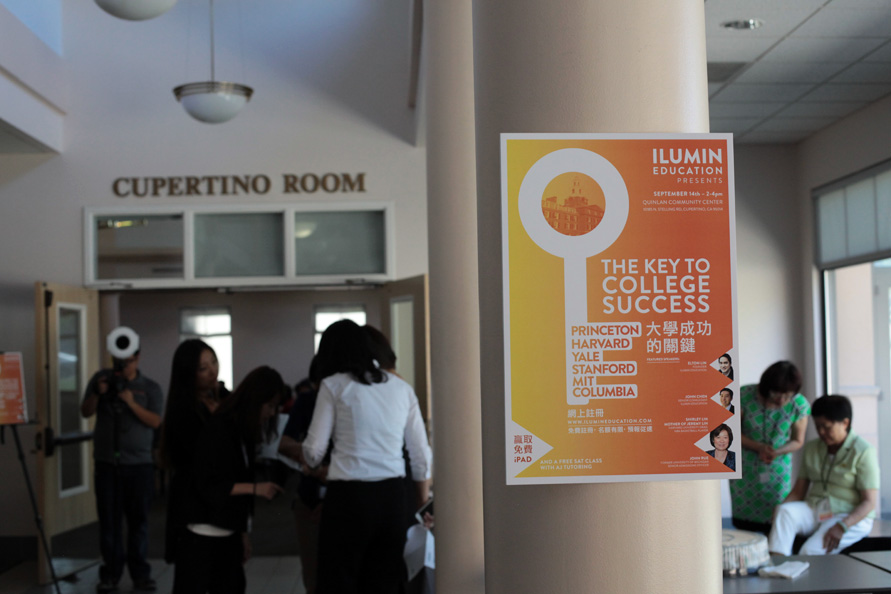
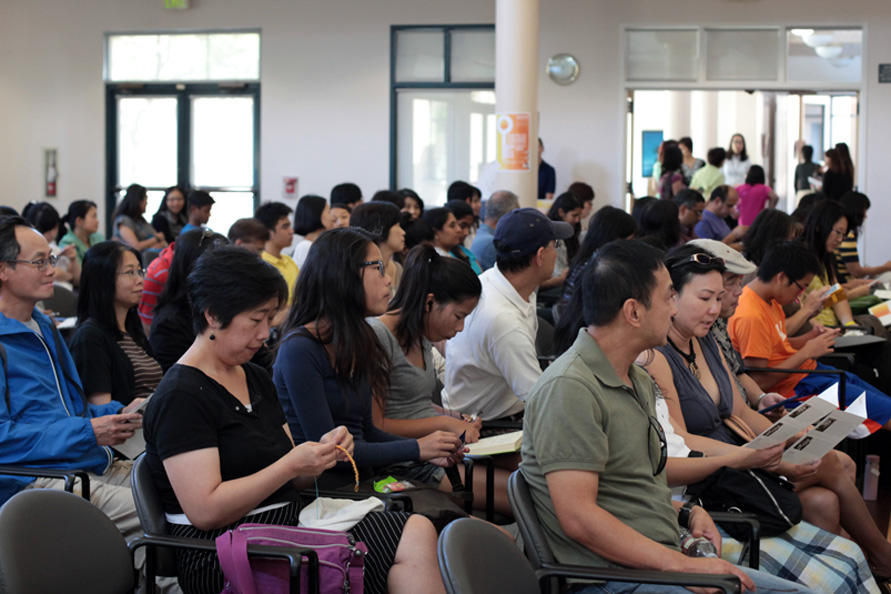
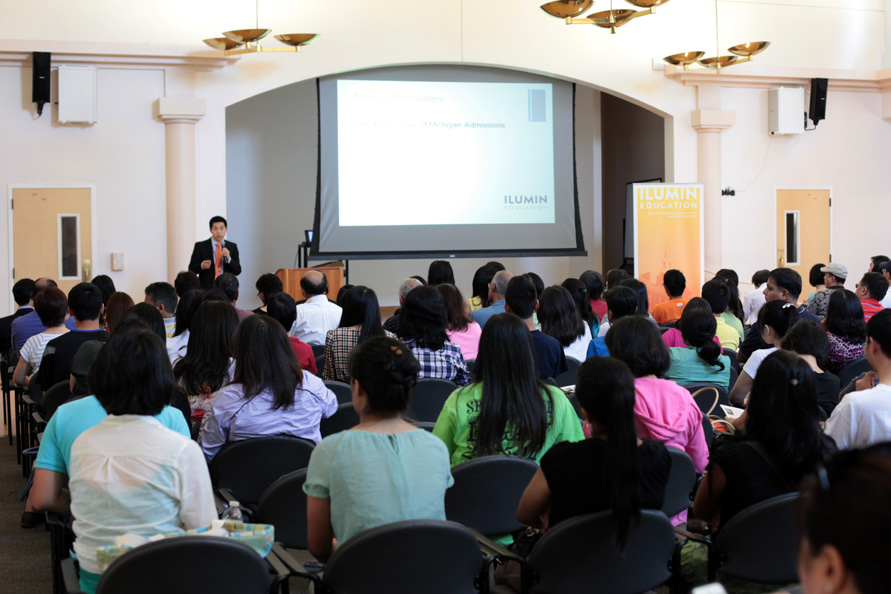
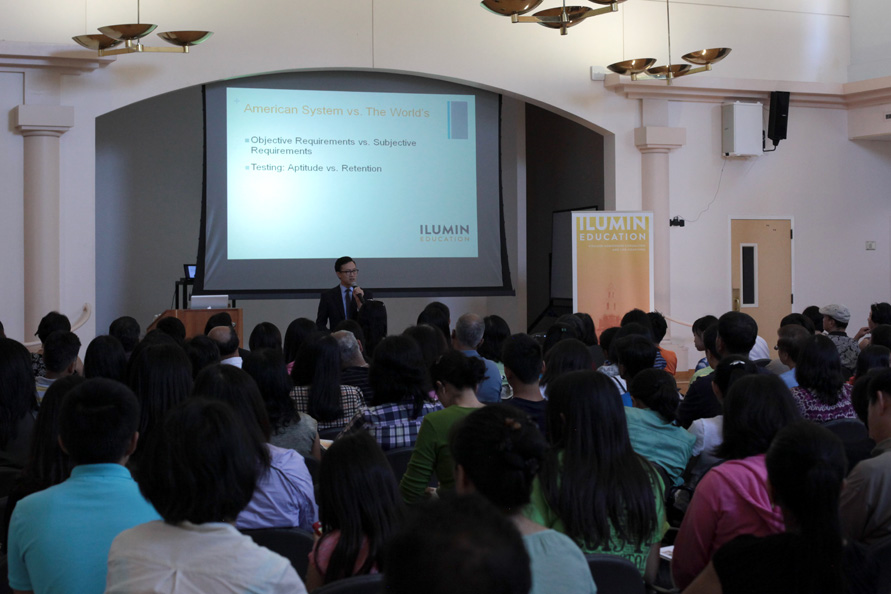
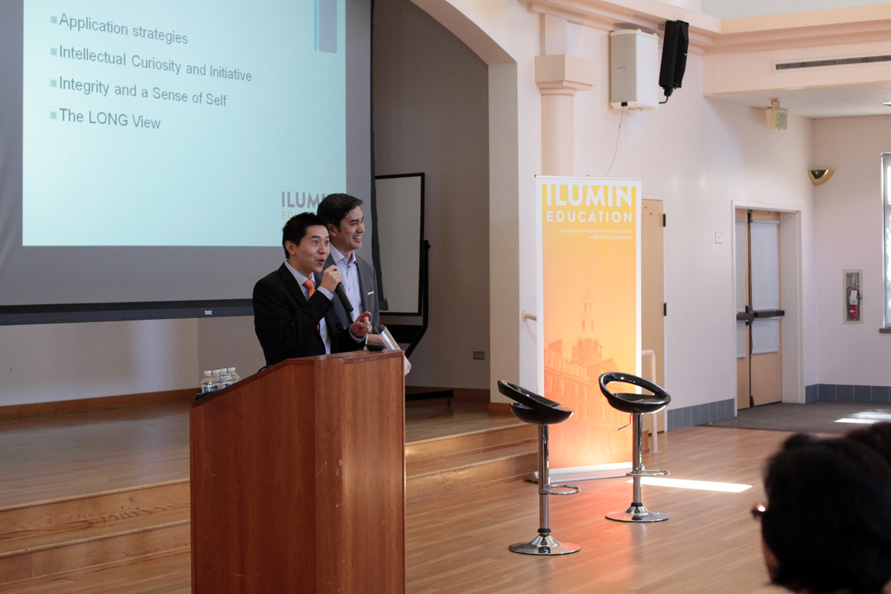
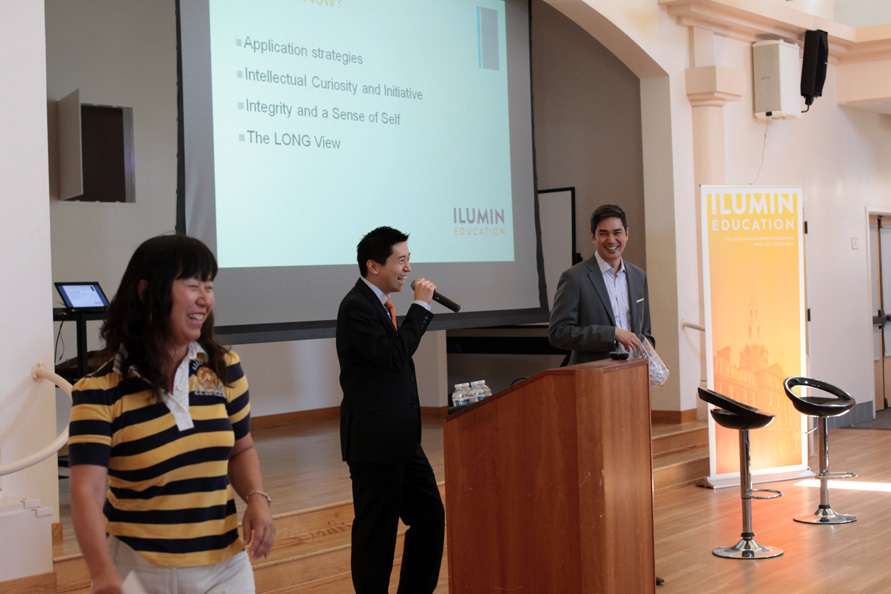
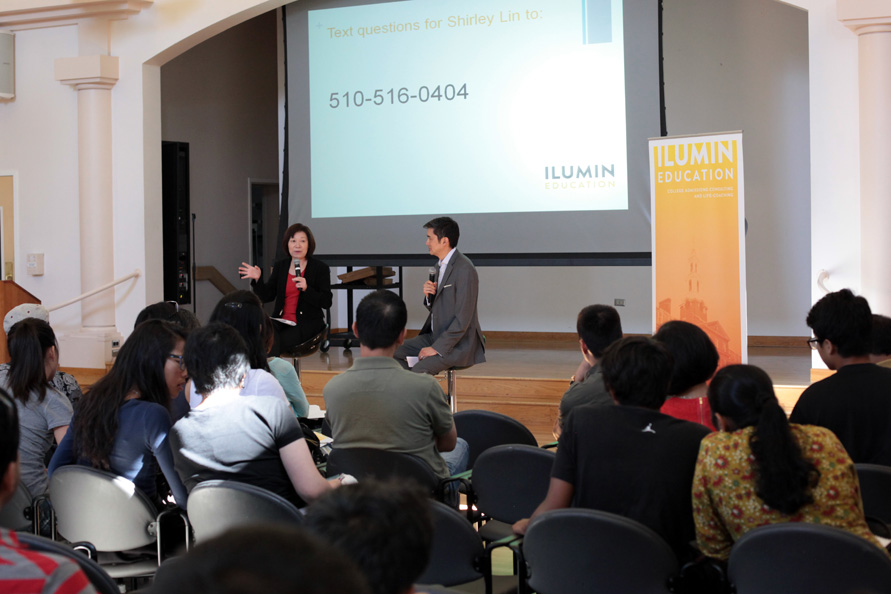
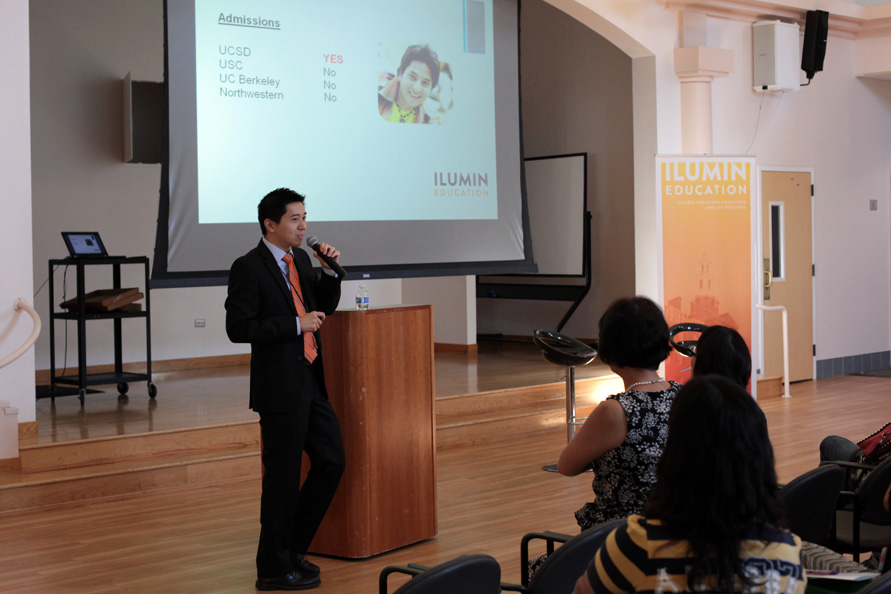
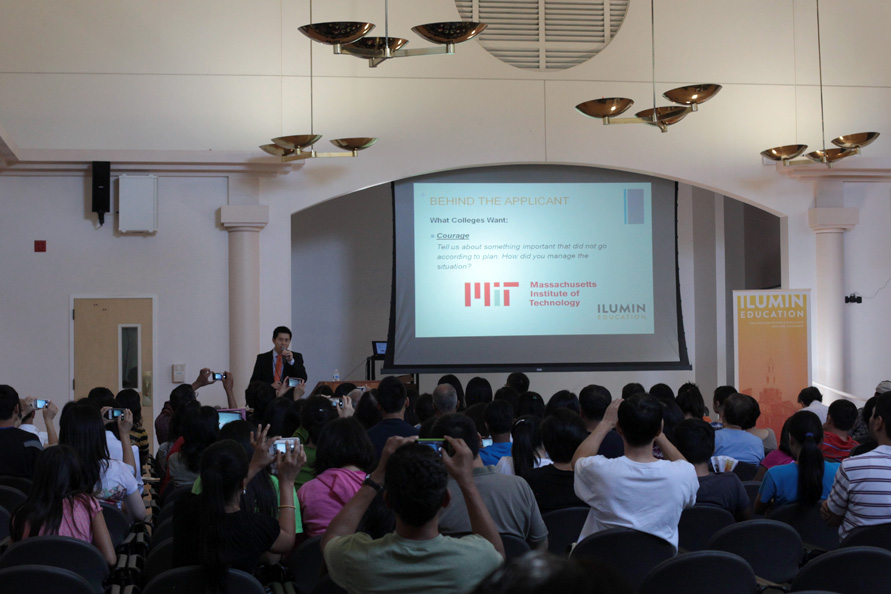
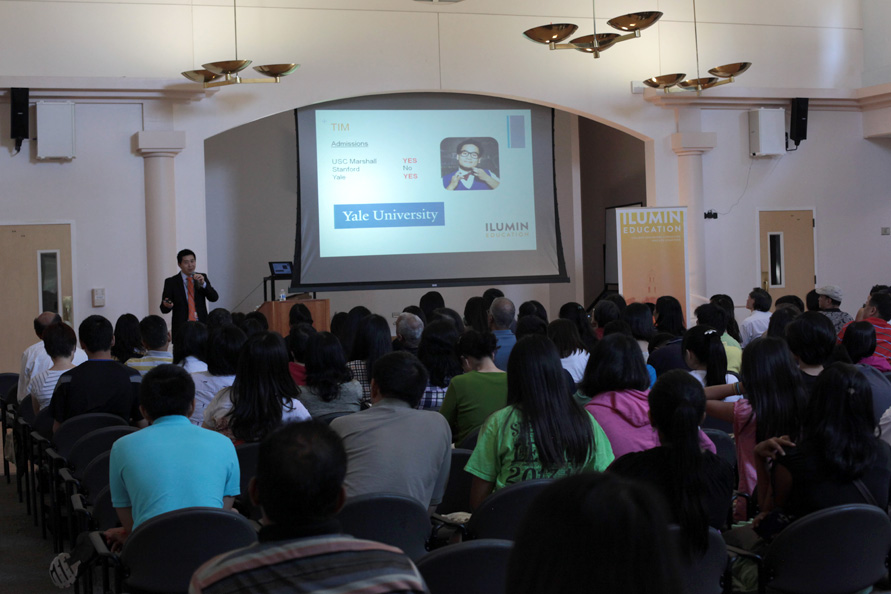
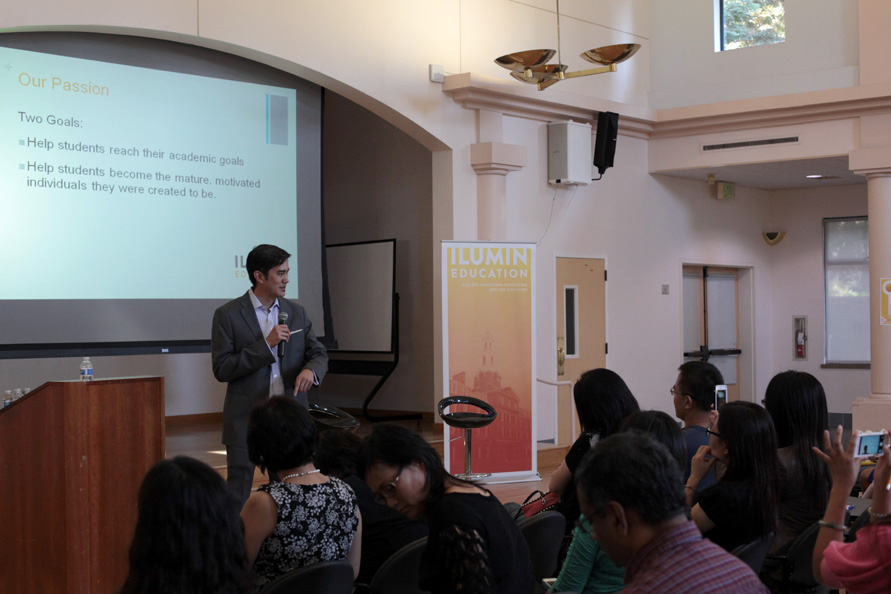
Many thanks to those of you who came to our first community seminar entitled "The Key to College Success"! We're thankful for all the kind words and glad you left with refreshing and practical advice. We're extremely grateful to our two special guests, Shirley Lin (the mother of Jeremy Lin) and John Rue (former University of Michigan Senior Admissions Counselor) who had ample wisdom to share about both the parenting and the admissions process. Lastly many thanks to two great partners, AJ Tutoring and Legend Learning who donated the SAT Training Class and AP Class, so we can share it with those who came. 

For those who weren't able to attend, we're working on editing the video so we can share some highlights from a great afternoon. In the mean time, sign up for our email list (scroll to bottom) and we'll let you know as soon as it's ready. Enjoy a few photos from event. Thanks and will be in touch!

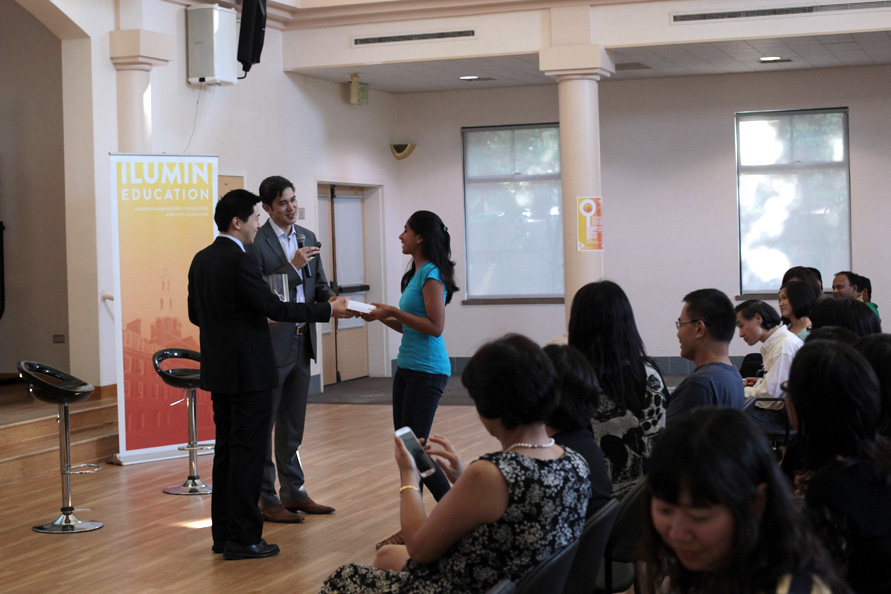
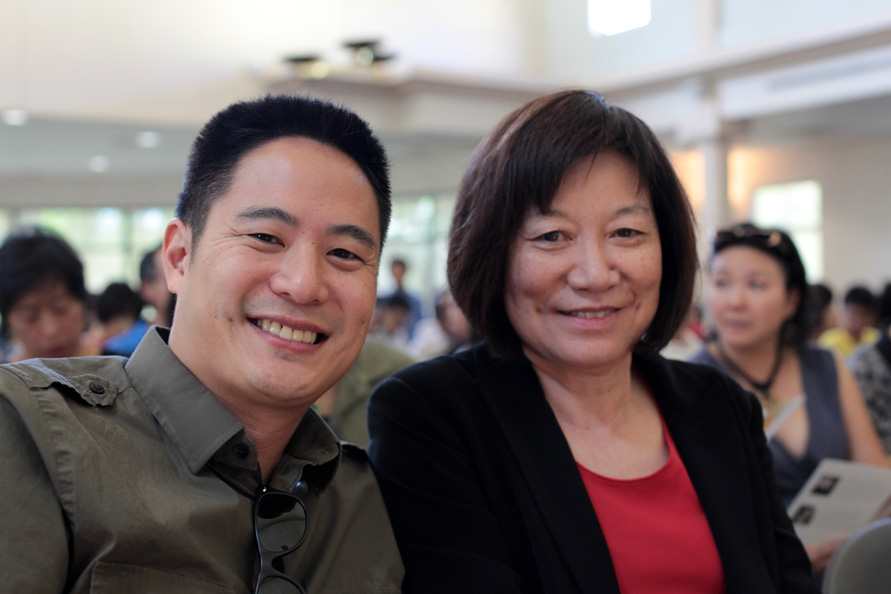
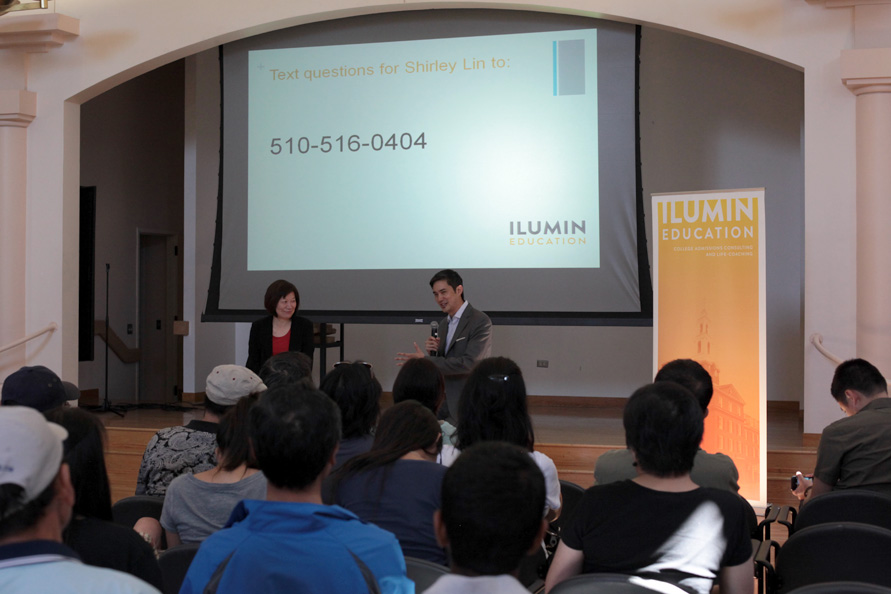
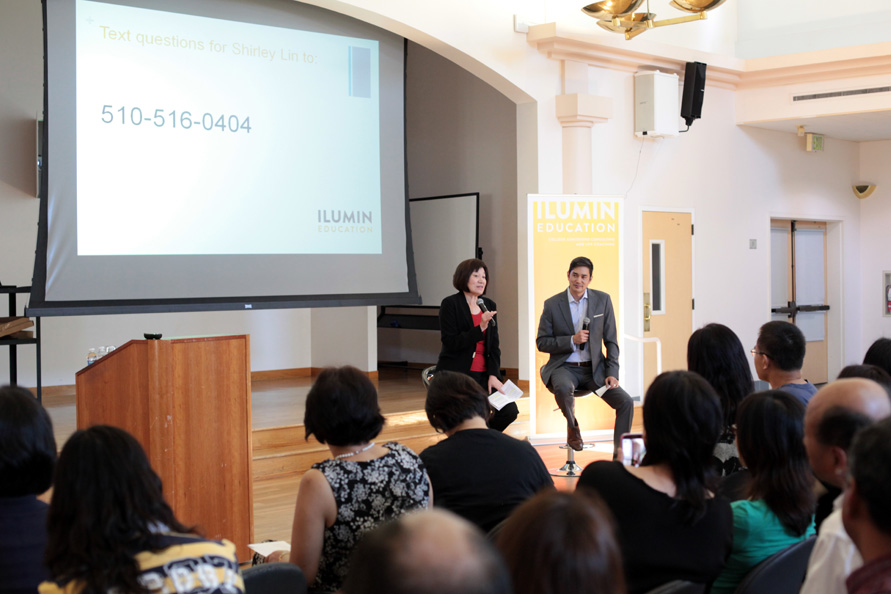
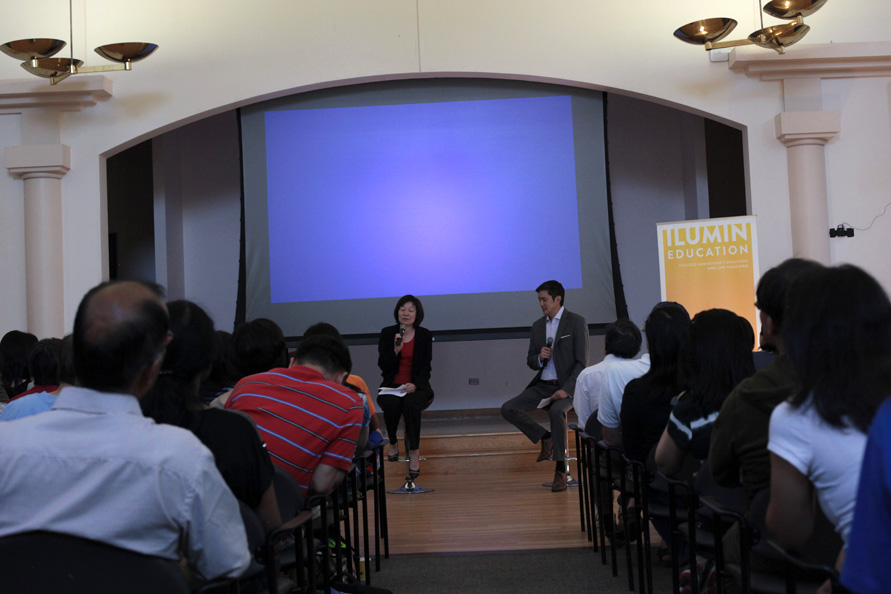
Shirley LIn and Elton Lin doing a question and answer session with the audience. 

Shirley LIn and Elton Lin doing a question and answer session with the audience. 

Former Michigan Senior Admissions Counselor, John Rue, sharing wisdom on the admissions process.

Former Michigan Senior Admissions Counselor, John Rue, sharing wisdom on the admissions process.

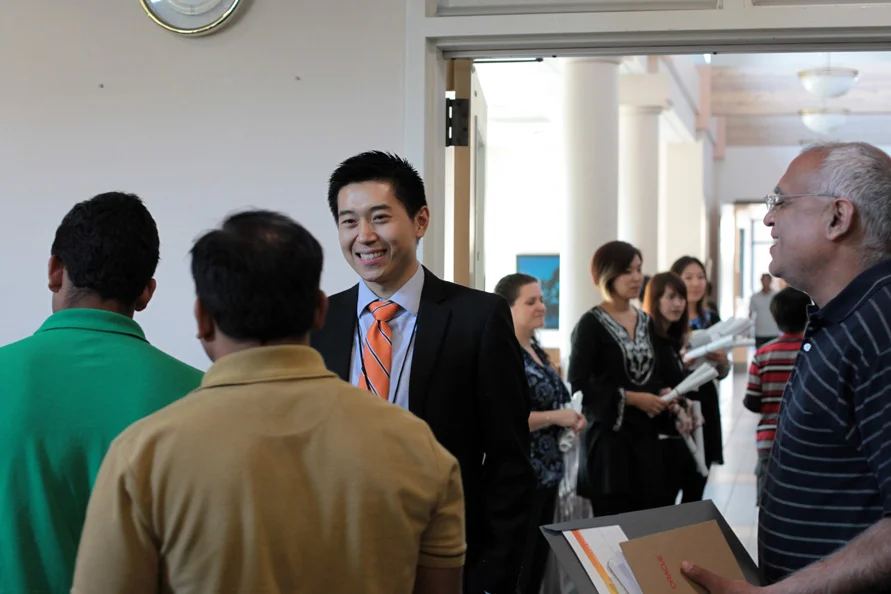
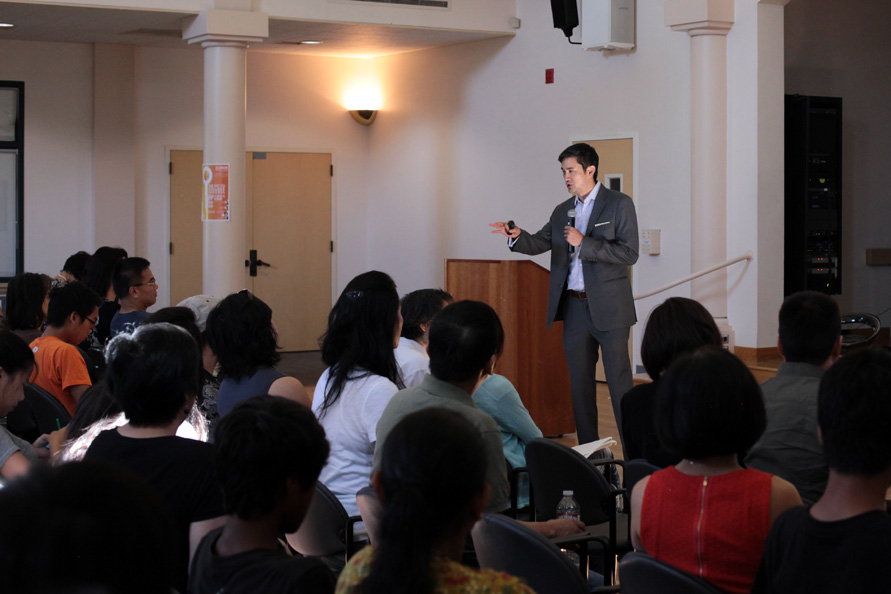
John Chen, Educational Consultant from ILUMIN Education, speaking with seminar attendees (and new friends).

John Chen, Educational Consultant from ILUMIN Education, speaking with seminar attendees (and new friends).

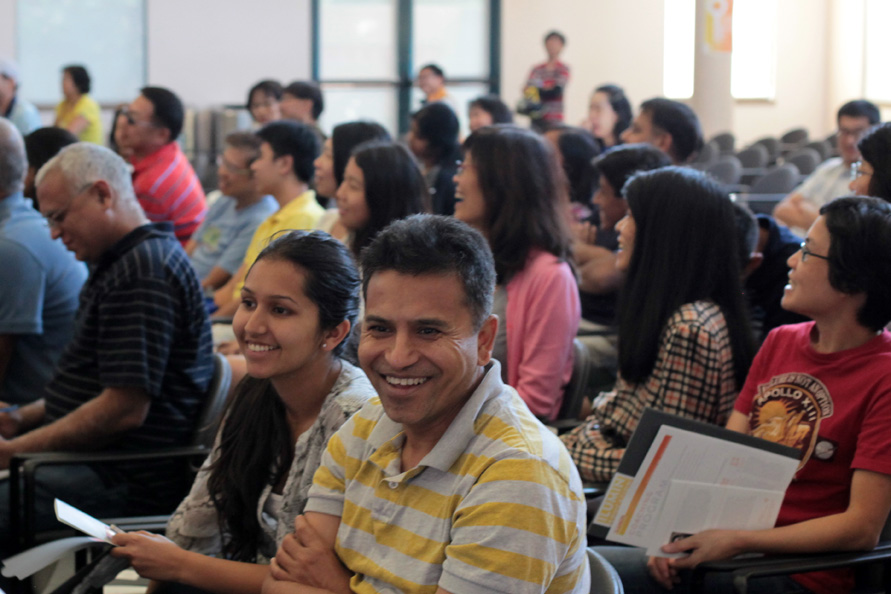
Photos from the The Keys to College Success Event (CLICK on photo above for MORE photos); also Amritha the winner of the iPad giveaway!

World Journal Educational Expo and College Fair

Elton Lin

Just a quick announcement to share - we'll be at the World Journal Educational Expo at the Santa Clara Convention Center this weekend! We'll be putting on a workshop and sharing about changing college admissions trends students need to know for the coming season. Come and visit our booth at location S4 at the SCC. We'll be doing a giveaway for $50 gift cards to Target and Starbucks! 

World Journal Educational Expo
Santa Clara Convention Center
5001 Great America Pkwy
Santa Clara, CA 95054
Saturday - August 30th - 10am to 3pm

ILUMIN Workshop
"2014 Admissions Trends: What You NEED to Know!"
3:20 - 4:10pm

Best SAT Score BOOSTING Tip: READ, READ, READ

Elton Lin

There is one immutable truth in my time working with students. The students who read, score highest on the SAT. Of course reading doesn't necessarily help on the math section. But the students who read well (finish books, peruse good periodicals and are just curious) score well on the English portions of the test and tend to have the discipline to prepare adequately for the math section. My advice to you this summer.... READ.

I wish I read more when I was in junior high and high school. Reading only caught on for me once I got to college. I started reading John Grisham and Mitch Albom and slowly progressed to more philosophical things like Henri Nouwen and Freidrich Nietzsche. I also read Andre Agassi's autobiography recently. CRAZY stuff; I couldn't believe his wig was going to fly off during the 1990 French Open finals! Whatever it is, start a plan and get reading!

A few tips for creating a good reading list:

  • Continue reading in genres you like (sci-fi, historical fiction, etc.), but read books that are more challenging with vocabulary, syntax and style. How do you find them? Tip: AMAZON.

  • Read good periodicals like the New York Times, The New Yorker Magazine and The Atlantic. Read up on what's going on in the world. The new SAT will test more on critical thinking and historical contexts. You'll be better prepared by understanding the problems in our world and how people are solving those problems. 

  • Set goals! At last two articles a day! At least three books a semester! Whatever it is, set a goal and shoot for it. 

Need more help putting together a good reading plan? Contact us here at ILUMIN! Read on!

COLLEGE LISTS: SCHOOLS THAT ARE TEST OPTIONAL

Elton Lin

A lot of you are considering what schools to apply for next year. A few of you have your sights set on the big guns: Harvard, Princeton, Yale, etc. But there are a bunch of you out there that may feel held back by poor test scores. You worked hard, have decent grades and good extracurriculars, but you just don't do well on tests. Don't worry, it happens to a lot of us. You're not alone!

There's a growing number of (good) schools that are electing to be test optional. Here are a few really awesome schools that do NOT require standardized tests:

Bowdoin College - GREAT school and super selective. Ranked 4th on US News National Liberal Arts list. Small classes and students love their professors. You have to be stellar to apply, but at least you don't need to send in your test scores.

George Mason University - In 2009, US News ranked GMU the #1 ranked up and coming college. Great for engineering and business (even if you bombed it on the SAT Math 2).

Pitzer College - Part of the Claremont Colleges. You can take classes and take part in any activities throughout the Claremont network of schools (yes, that includes Pomona College and Harvey Mudd). AND nobody needs to know that you're not great with the SAT.

I'll list out a few more schools in another post. Feel free to contact us with any questions or post a comment below!